
01
Simplify the mold
Review a single-cavity layout, straightforward parting lines and practical insert options. Reduce unnecessary complexity where the part design allows.
SIMPLIFIED MOLDS · LOW-VOLUME INJECTION MOLDING
Need molded plastic parts before demand reaches mass-production volumes? Explore a simpler mold built around your first batch, your resin and your plans to grow.
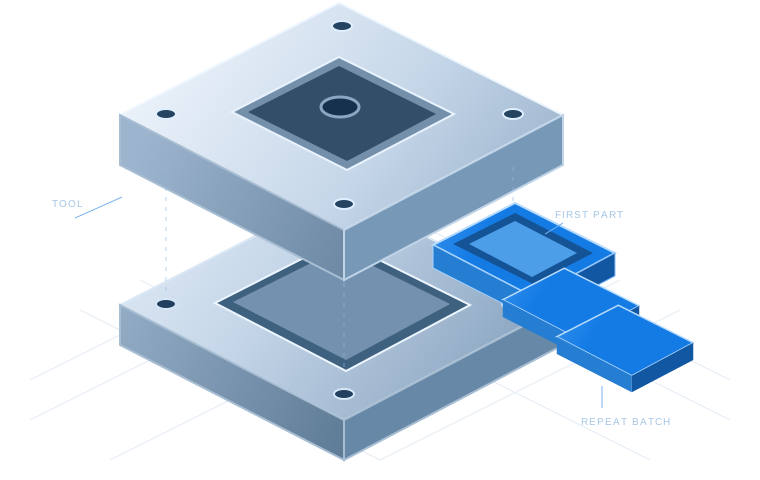
Right-size the tooling investmentMatch the mold to your actual production plan
Use the resin your part needsReview the exact grade and functional requirements
Start small, plan repeat ordersDiscuss tool life and storage before committing
MAKE THE FIRST BATCH POSSIBLE
Tooling can dominate the cost of a short production run. The starting point is a review of what your part needs—and which tooling features can be simplified.
Review a single-cavity layout, straightforward parting lines and practical insert options. Reduce unnecessary complexity where the part design allows.
Discuss aluminum, soft steel or a simplified insert approach. Resin, geometry, surface quality and expected shot count guide the recommendation.
Review trial parts against agreed dimensions and appearance criteria. Confirm any changes and approve samples before the agreed production batch.
Request a quote that distinguishes tooling, trial samples, molded parts and any secondary operations. Compare the total project cost at your first batch quantity and at a possible repeat quantity, including any repeat-run setup charges.
A simpler tool may reduce the upfront commitment. The right choice still depends on part complexity, resin and total demand.
CHOOSE FOR THE WHOLE PROJECT
A stable design and a need for molded resin parts are useful starting points. We review your priorities before recommending a route.
| Your priority | Rapid tooling / small-batch molding | Another route to consider |
|---|---|---|
| Design changes every iteration | Quote once the main geometry is ready; later changes may require tool rework. | 3D printing or CNC for early geometry checks. |
| Pilot launch or limited demand | Review simpler tooling, trial samples and a defined first batch. | Compare total cost with printed or machined parts. |
| Specified thermoplastic resin | Assess the required grade, shrinkage, finish and molding conditions. | Confirm whether another process can meet the same material requirements. |
| Sustained high production volume | Review tool wear, cycle time and repeat-order economics. | Evaluate production tooling and more cavities for long-term demand. |
Complex undercuts, tight cosmetic requirements, abrasive resins and high shot counts may change the proposed tooling strategy. Tool suitability is confirmed during review.
START WITH THE PART’S REQUIREMENTS
Request the resin family you need, then specify the exact grade, color and performance requirements. Availability and process suitability are reviewed with your files.
Enclosures, covers and product housings.
Tell us about impact, temperature and appearance.Parts with specific strength or optical requirements.
Mark clear surfaces and cosmetic acceptance criteria.Lightweight functional parts and flexible features.
Identify living hinges, chemical exposure and fit.Engineering components with application-specific needs.
State the grade, fillers, wear and dimensional requirements.FROM A PILOT RUN TO REPEAT ORDERS
Launching a niche product, testing the market or bridging a supply gap? Share your first quantity and expected total demand so the mold proposal reflects both.
Example enquiry quantities, not fixed minimums or price tiers. Enter your own quantity in the form.
LET’S REVIEW YOUR SMALL-BATCH PROJECT
Upload your design and tell us how many parts you need. Request a tooling proposal and a reviewed batch quote.
Discuss draft, wall sections, undercuts, gates, ejector marks and critical fits.
Confirm tool construction, cavities, expected life, samples, costs and lead time.
Review the trial parts and agree any changes before batch production.
Confirm inspection, delivery, mold ownership, storage and repeat-order terms.
ZIP your STEP or STP model and include a PDF drawing. Identify tolerances, resin grade, color, visible surfaces and any inserts or secondary operations.
Still developing the design? Share what you have for an initial discussion.
Contact support ↗Fields marked * are required.
Keep your reference for follow-up. Our team will review your part requirements.
CLEAR ANSWERS BEFORE YOU COMMIT
It means matching the tool construction and features to the actual project rather than assuming a long-life, high-output production mold. The proposal may involve a single cavity, aluminum or soft-steel tooling, or simplified inserts. The suitable approach depends on your part and resin.
Yes—submit that quantity for review, or enter another quantity. We assess the total tooling and batch cost before confirming feasibility, pricing and any minimum order. Very small quantities may be better suited to another process.
This service concerns thermoplastic injection molding with a mold. It is separate from silicone-mold vacuum casting. The proposed resin grade and process will be specified in the quote.
There is no fixed saving percentage. Geometry, cavities, material, finish, tool life and secondary operations affect the quote. Compare the full project cost, including tooling, samples and parts, at your planned quantities.
Tool life is project-specific. Resin abrasiveness, mold material, geometry and maintenance all matter. The proposed service life and repeat-order conditions must be agreed before tooling starts.
Ask us to review the change before committing to it: some changes need inserts or rework, while others require a new mold. Repeat orders depend on the agreed tool life, condition, storage and availability.
Mold ownership, storage period, maintenance, transfer or delivery options and any associated charges are confirmed in the quotation or order agreement. Include any specific requirement in your brief.
No. It saves your files and requirements for review. Tooling charges, unit prices, sample approval, schedule and production terms must be agreed before work begins.
No account yet?
Create an Account